MISSION CLAY ART & INDUSTRY
4850 W. Buckeye Road
Phoenix, Arizona 85043
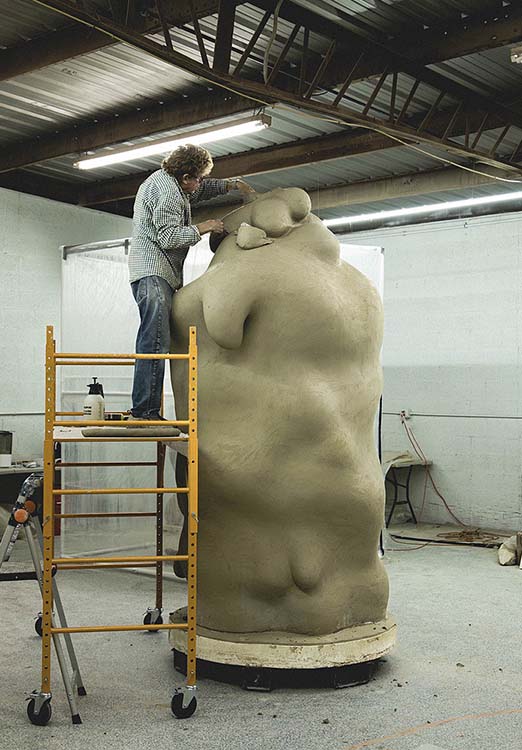
For over three decades, artists used factory pipe as a sort of three-dimensional blank canvas, mainly for carving and decorating with ceramic underglaze colors. Today, artists such as Chris Gustin are coil-building their sculptures with modeling clay, while others, such as Robert Harrison, are using factory-fired pipe in a more assemblage-based approach.
PROGRAM HISTORY
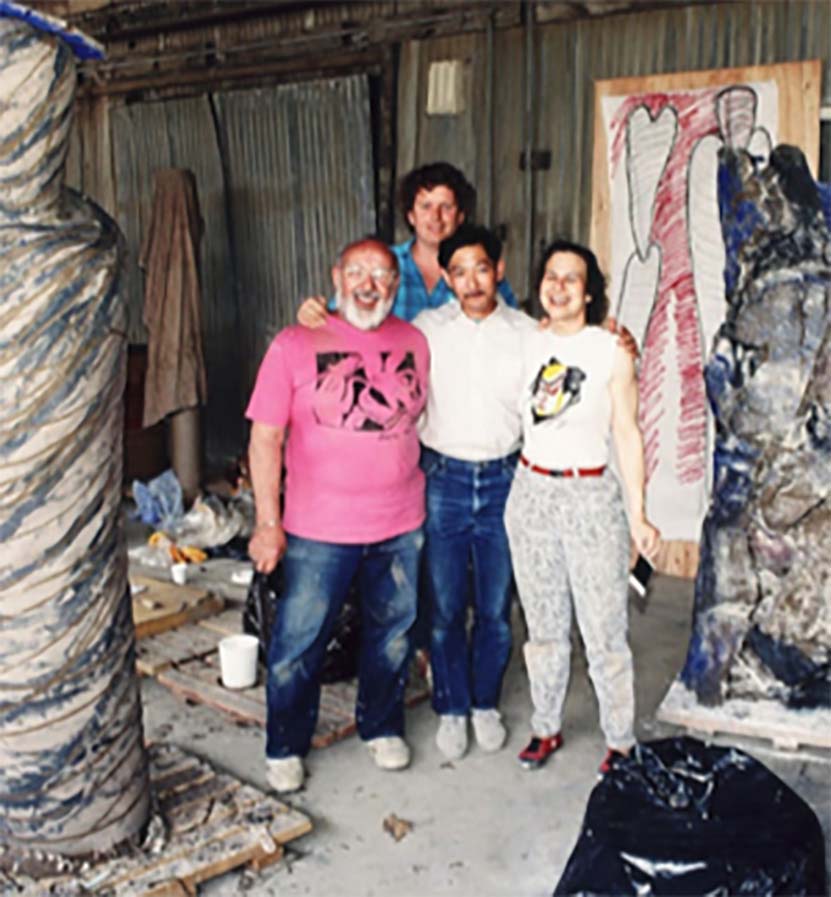
In 1979, artist and educator Jerry Caplan contacted Walter and Owen Garrett, owners of Mission Clay Products (a clay pipe manufacturing company formerly in Niles, California), and asked whether they would allow him to conduct a workshop at their factory. They agreed, and the clay pipe art-making program at Mission Clay was born.
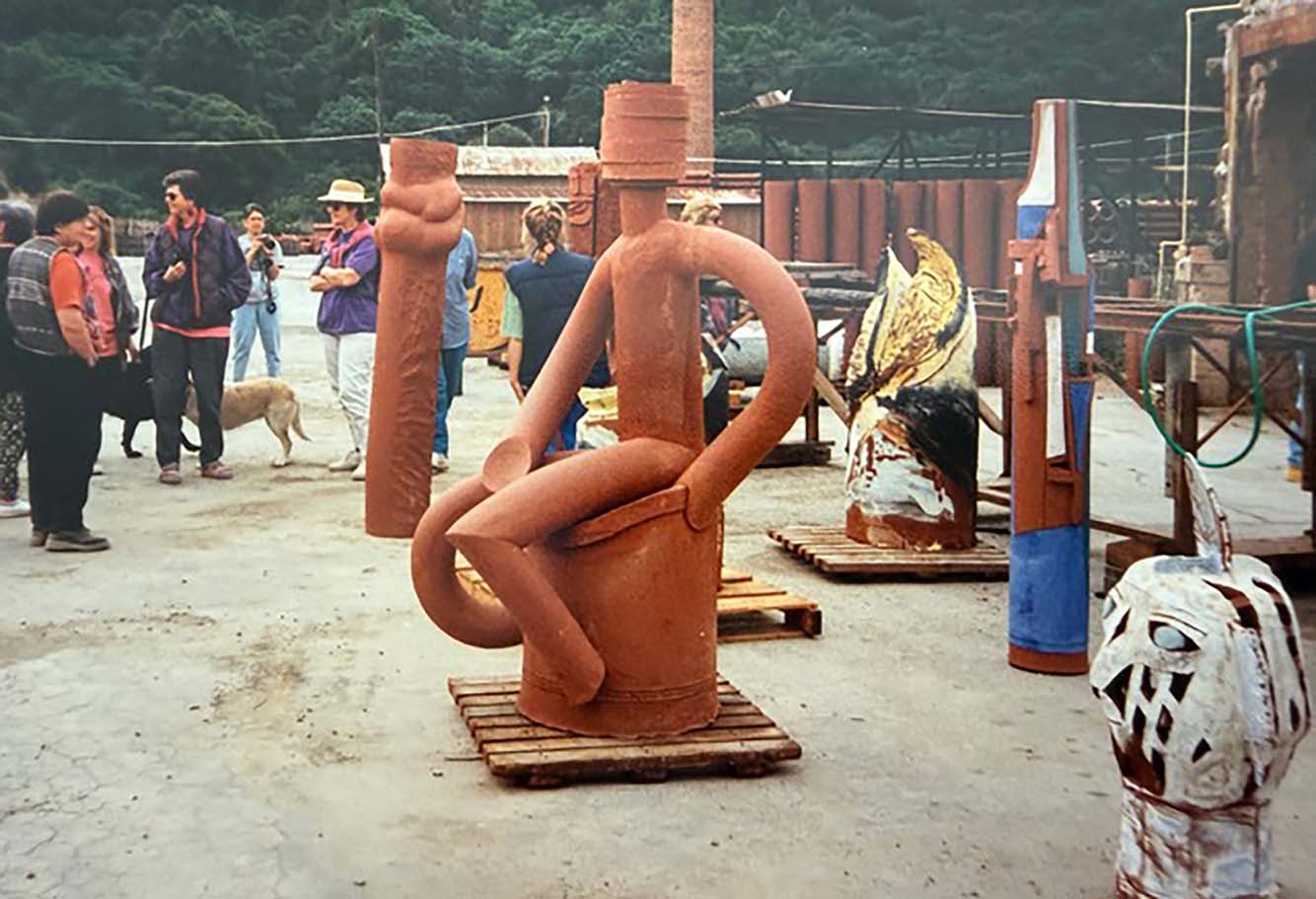
Six years later, the program officially launched at the factory, with the first workshop taking place in 1985 under the guidance of Jerry Caplan. The program included 20 participants who joyfully carved, sculpted, and assembled damp clay from extruded pipe fresh off the factory production line. Eventually, this led to the founding of the Mission Clay Pipe Symposium, which included workshops and demonstrations facilitated by renowned artists such as Christine Federighi, Stephen DeStaebler, Ron Nagle, Judy Moonelis, and Tony Hepburn.
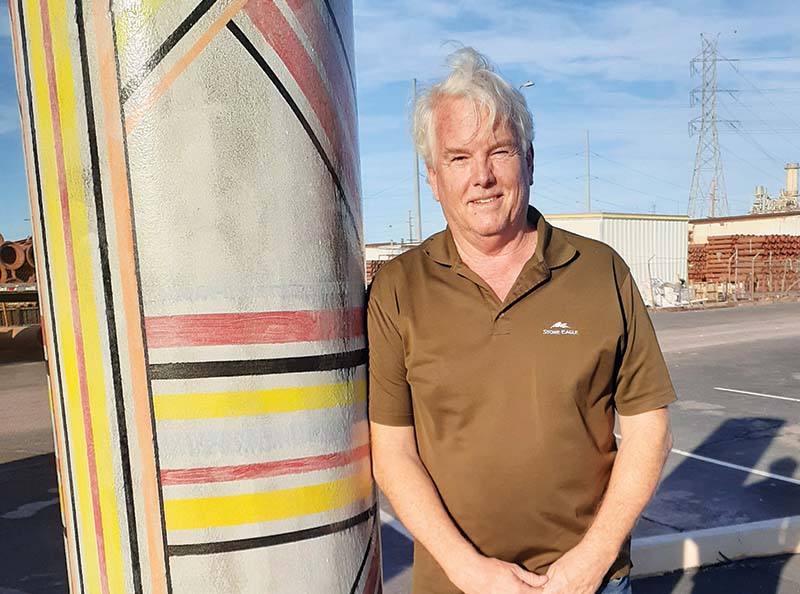
Today, the Mission Clay Art and Industry Program is led by Program Director Bryan Vansell, who has been orchestrating the program since 1988. Himself an artist, he is ideally positioned to support and guide participants' creative visions. For over 47 years, the program has served individuals of all ages and skill levels, from very young children and adults to art tour groups, art students, and professional artists, with opportunities to carve and paint clay pipes.
“What excites me is giving artists the opportunity to dream at a scale they would never imagine.”
- Bryan Vansell, Director
Artist and Factory Collaboration:
Innovative Solutions to Handling Clay on a Massive Scale
Mission Clay Arts and Industry provides an unparalleled environment for the creative process and the development of new work and ideas. Today, the program is focused on professional artists whose residency length ranges from one month to a year or more, depending on the scope of the project. Artists under consideration are typically recommended to Program Director Bryan Vansell by fellow artists, curators, gallery owners, and museum directors, though proposals from artists are also welcome. There is no formal application process.
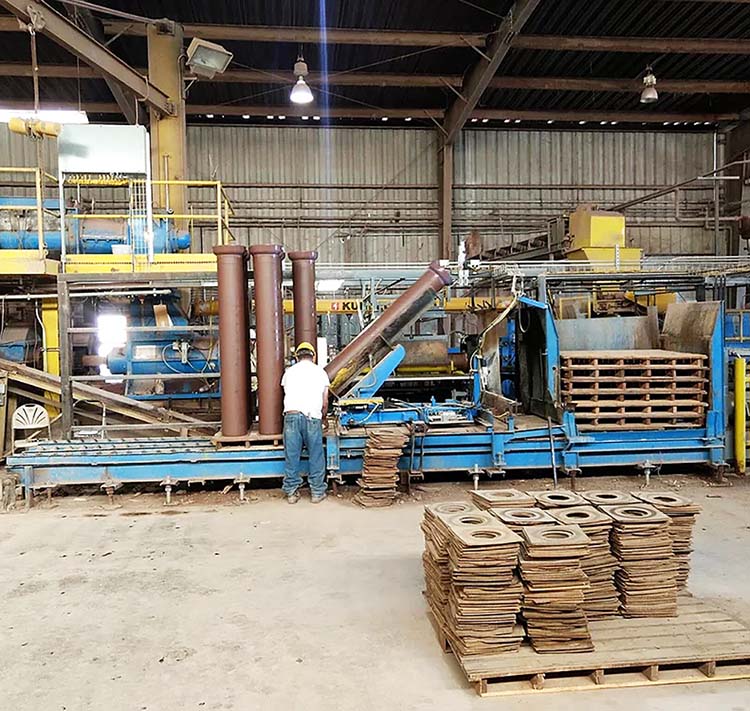
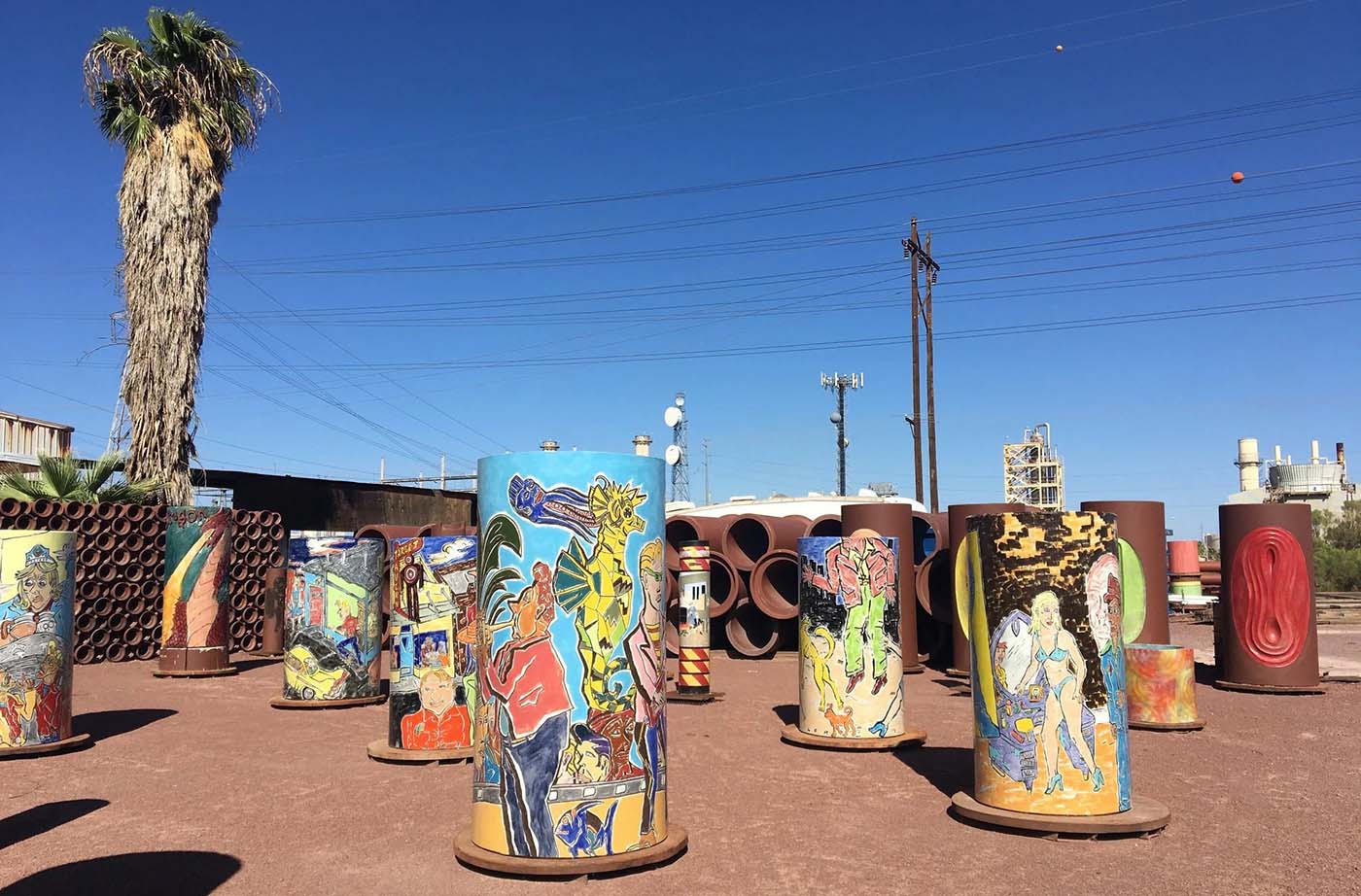
First-time visitors to the Building Products - Mission Clay factory in Phoenix, Arizona, are met with a unique blend of industry and art. Dozens of ceramic sculptures are placed around the factory, in the parking lot, along the fence, and among hundreds of rows of fired clay pipe.
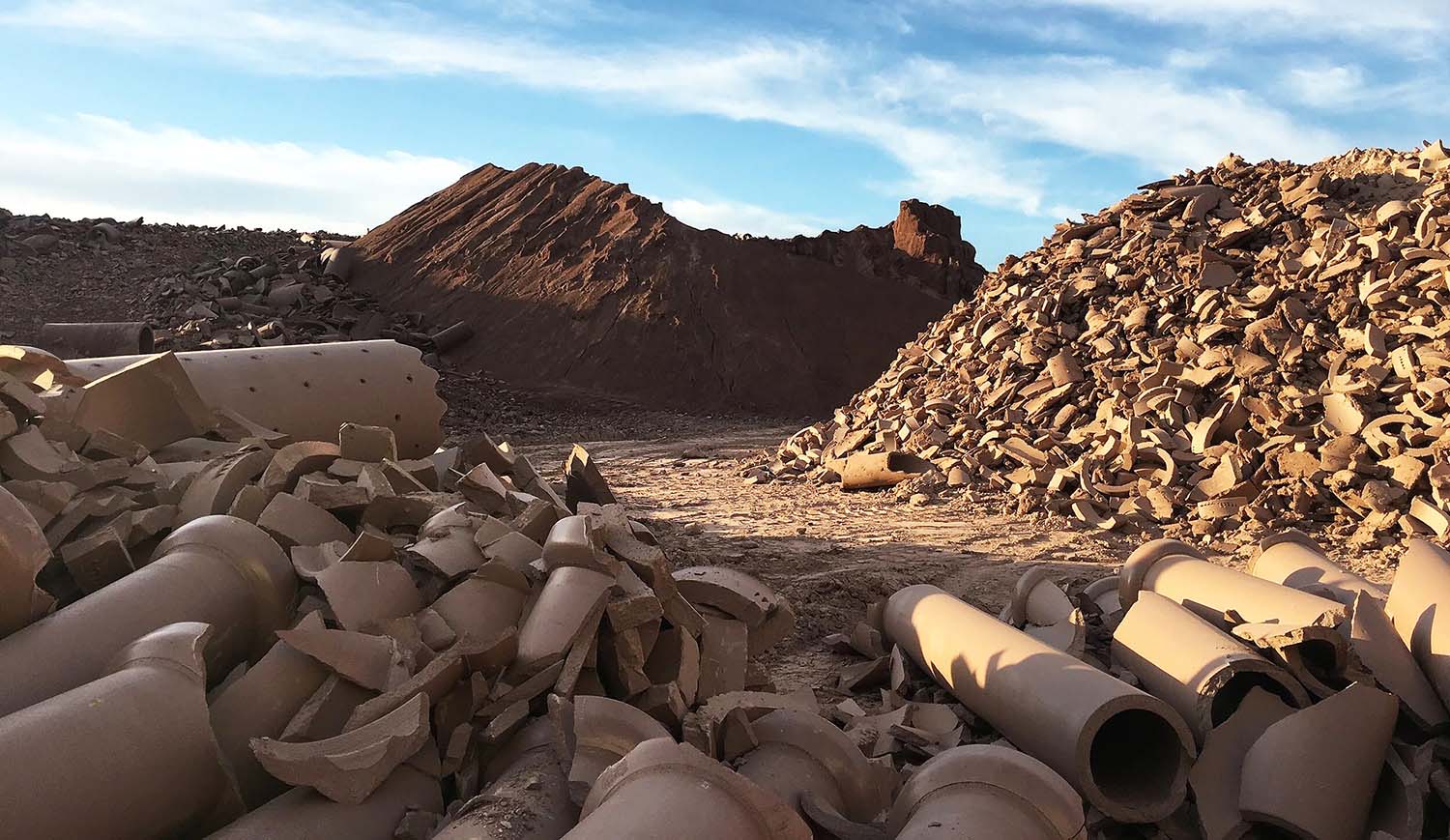
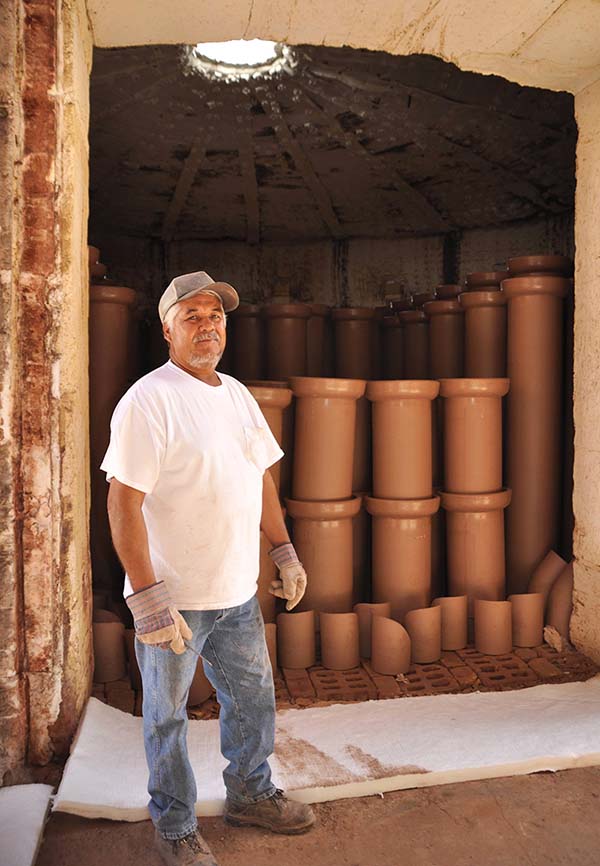
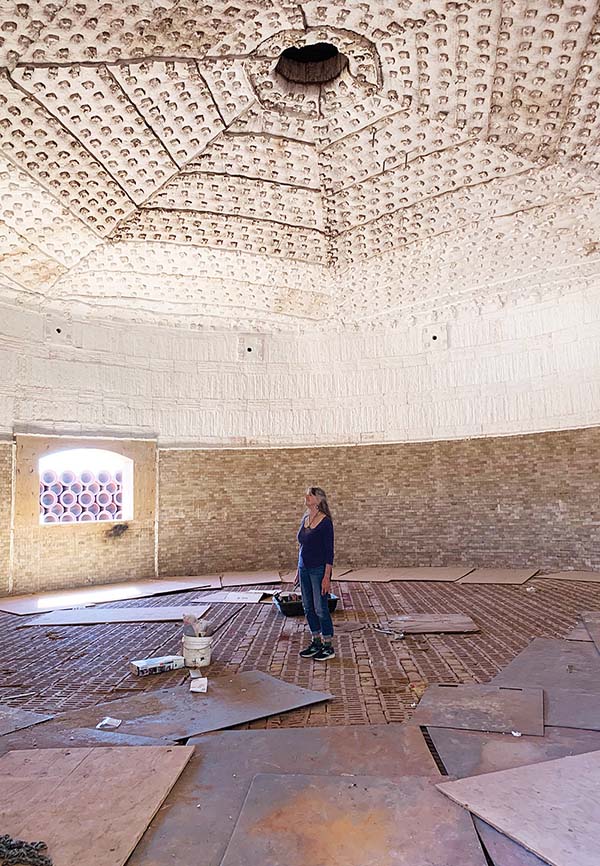
After introductions, Vansell, Balistreri, and the resident artist jump into a golf cart with bull horns attached to the hood (once owned by sculptor Don Reitz) for a tour. They zip along, stopping to view the massive beehive-style gas kilns, five-story-tall clay pipe extrusion machine, pipe drying rooms, gasket sealing warehouse, ceramic laboratory, and kiln firing computer room. Behind the warehouse is a dry clay grinding machine and mountains of clay used to make the clay pipes.
Finally, the tour stops at the artist's studio, set within the factory's extrusion warehouse. The studio is outfitted with air conditioning, a welcome amenity for artists working in temperatures that can reach 115°F (46 C). Worktables, tools, and ceramic glazes and underglazes are available for artists' use. A large roll-up door opens into the main factory warehouse, allowing large sculptures to be moved in and out by forklift. Outside the studio is a crane for moving smaller parts and pieces, and next door is a machine shop for fabricating metal parts.
“Highly skilled work crews at the factory offered immense assistance in arranging firings and myriad other tasks.”
- Patrick Siler, Artist
At Mission Clay, there is a seamless synergy between the artist, factory management – Jon Humphreys and Robert Carmona – and staff. The artist's work is in sync with the factory workers, who are now accustomed to having artists working around the sprawling 25-acre (101,171 sq. m) facility. Artists rely on forklift drivers to move sculptures around the factory and count on experienced kiln loaders to carefully handle large sculptures and, at times, fragile clay forms that push the structural limits of a tubular clay pipe.
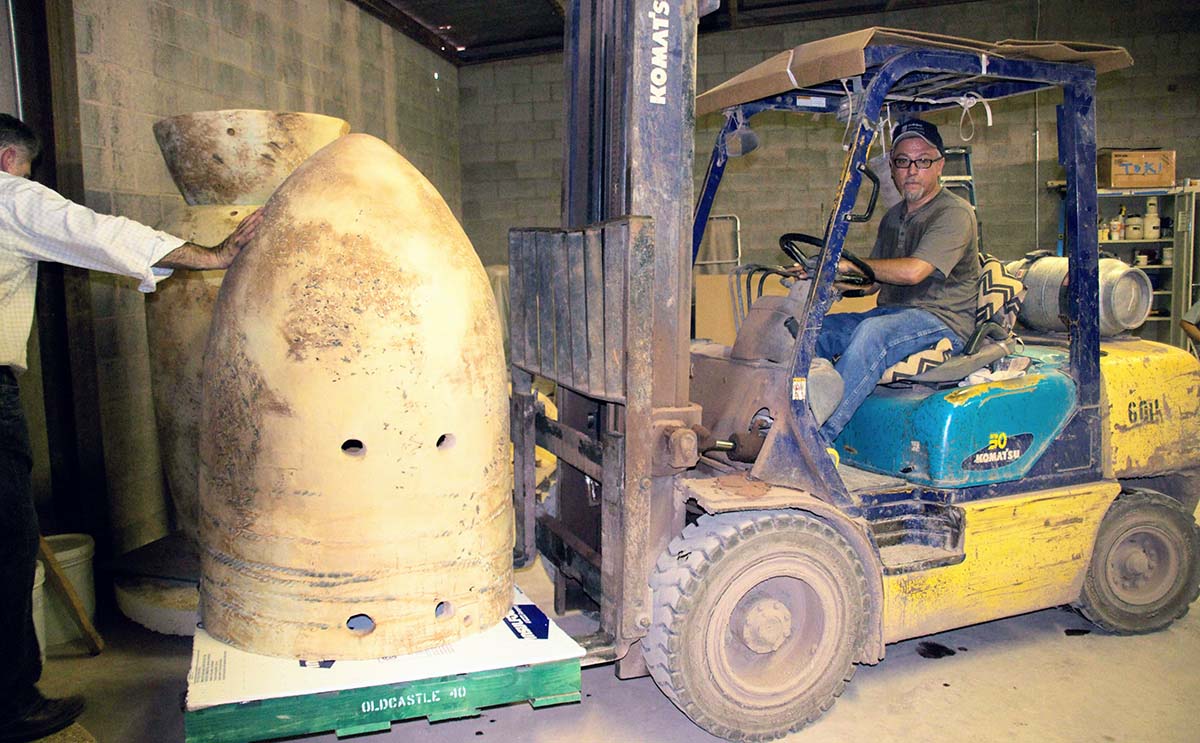
Mission Clay management is involved in project concepts that go beyond the scope of standard clay pipe production. They are rarely confronted with a project they cannot handle. However, on occasion, artists had deceptively simple requests that ultimately proved to be extreme technical challenges.
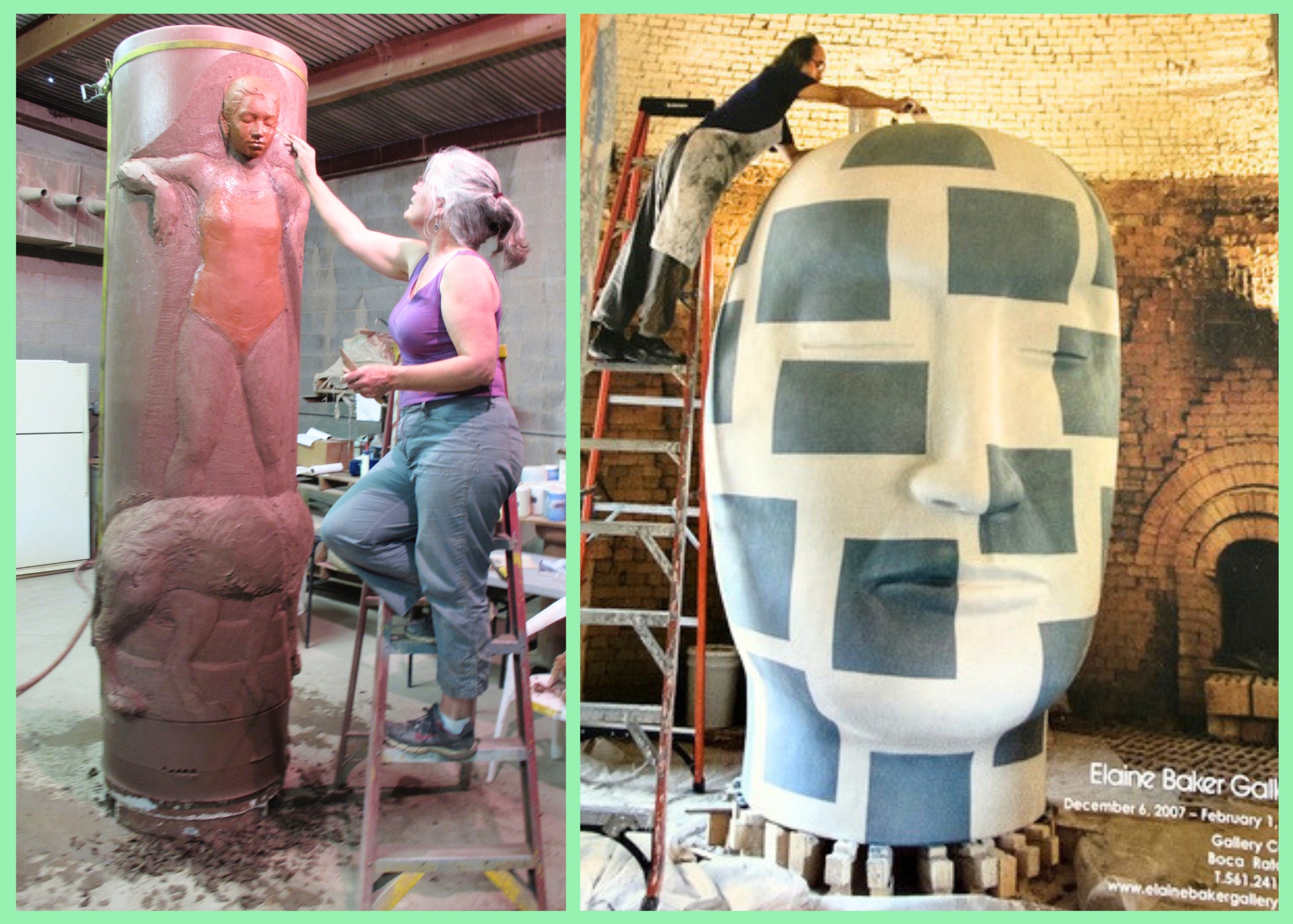
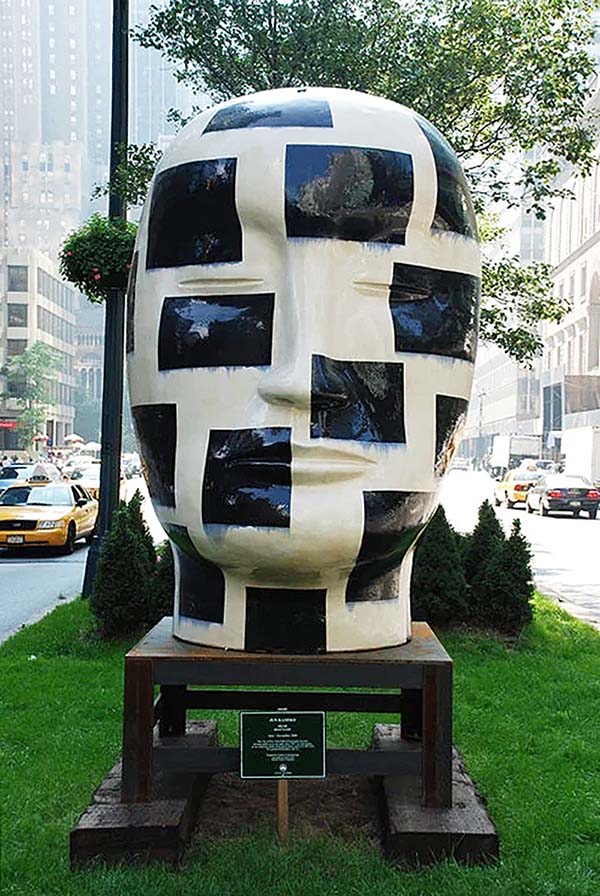
In one such case, Jun Kaneko asked if the factory could extrude a 12 ft. (3.66 m) tall pipe. The challenge was to lengthen the pipe by 4 ft. (1.2 m) beyond the standard 8 ft. (2.44 m) factory-production height. Once resolved, this led to another problem: how to load a 12 ft. (3.66 m) tall, 3,500 lb. (1,588 kg) clay pipe through a 10.5 ft. (3.2 m) kiln door. The solution required a forklift specially outfitted with a hydraulic tilting clamp to grab and tilt the pipe at a 45-degree angle.
In Matthew Barney's case, his fabrication team relied on the staff primarily for technical fabrication feedback on their installation and kiln-loading assistance when handling 5-6 ft. (1.5 - 1.8 m) long slabs. Assistant plant manager Robert Carmona noted, "Artists now build large-scale work on custom-built cast refractory pallets, which makes loading pieces into the kiln very easy, while also reducing handling breakage."
Artist’s Experiences at the Mission Clay Factory
Artists arriving at the factory for the first time are usually humbled when standing next to a freshly extruded clay pipe that can easily weigh more than ten times their body weight. When Don Reitz first arrived, he had to adjust his psyche before carving into the massive clay pipe wall, not to mention adapting to an entirely different set of tools, picking up tree-trimming saws, wood auger bits, and electric Sawzall tools in place of traditional ceramic carving tools.
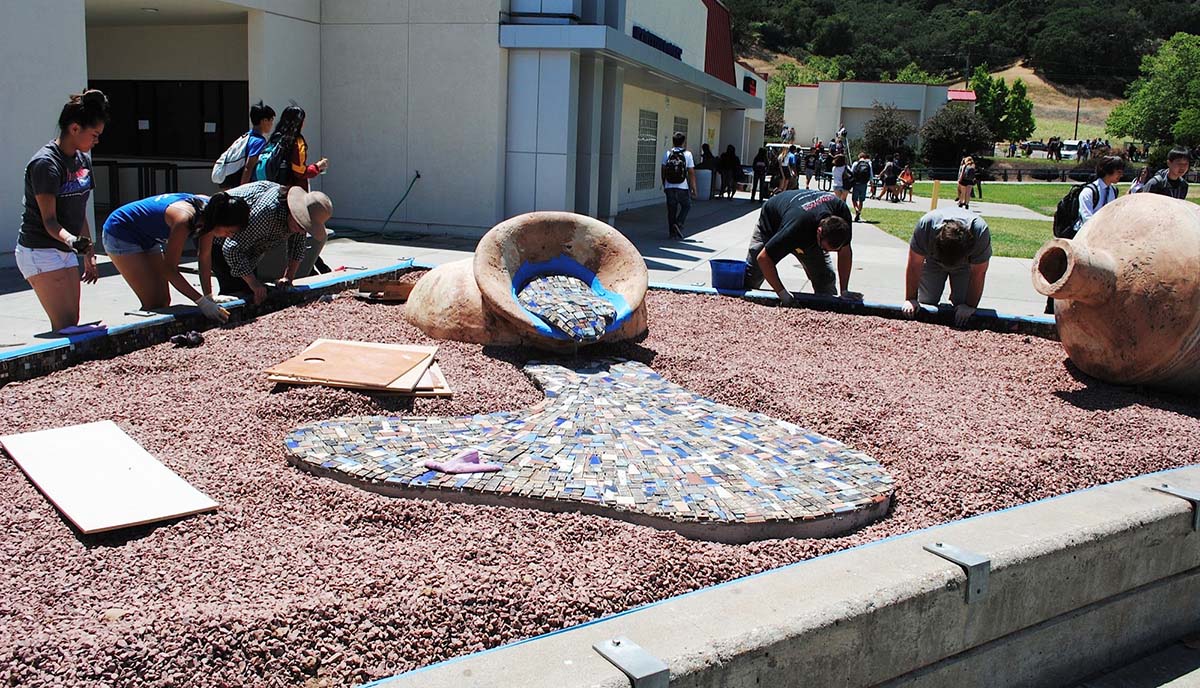
When Nancy Scotto arrived at the factory, she chose to coil-build her 7 ft. (2.1 m) tall, 2,000 lb (907 kg). clay amphora shapes. The extruded clay pipe did not suit her design, leading her to seek technical ceramic assistance from Eric Struck in developing a cone 3 sculpture paper clay. The eight-month project included fabricating massive pieces for a public art installation at Foothill High School in Pleasanton, California, in conjunction with her students.
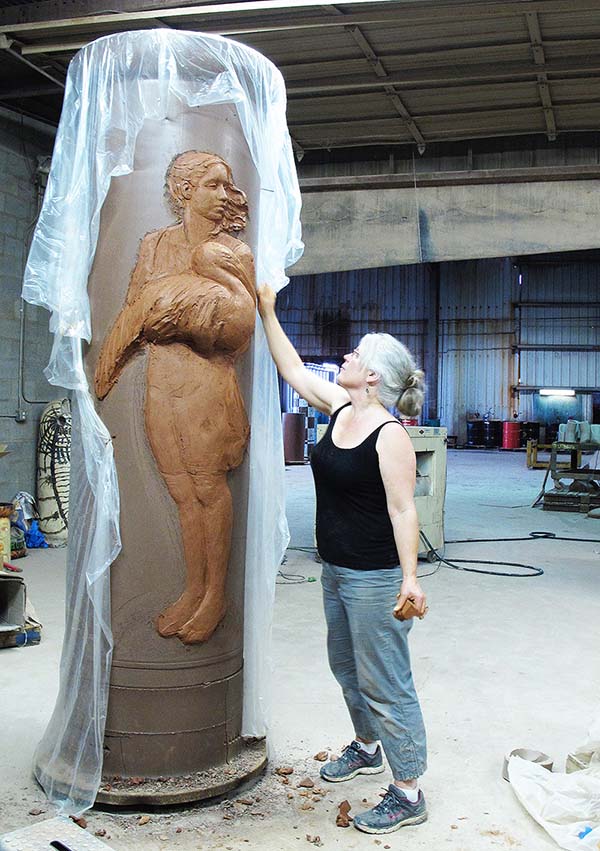
Figurative sculptor Lisa Reinertson arrived at the Mission Clay factory to explore bas-relief ideas. When she set foot in the factory, she remarked, "It was so cool to watch them extrude my pipe from the gigantic machine." The pipe was delivered to the studio by forklift, where she worked from a live model to articulate a figurative image onto the clay. One aspect of her research was to determine whether traditional hand-modeling stoneware and terracotta clays were materially compatible with the factory-extruded clay body. What she discovered was that cracking and adhesion problems occurred due to differences in clay formulation and shrinkage.
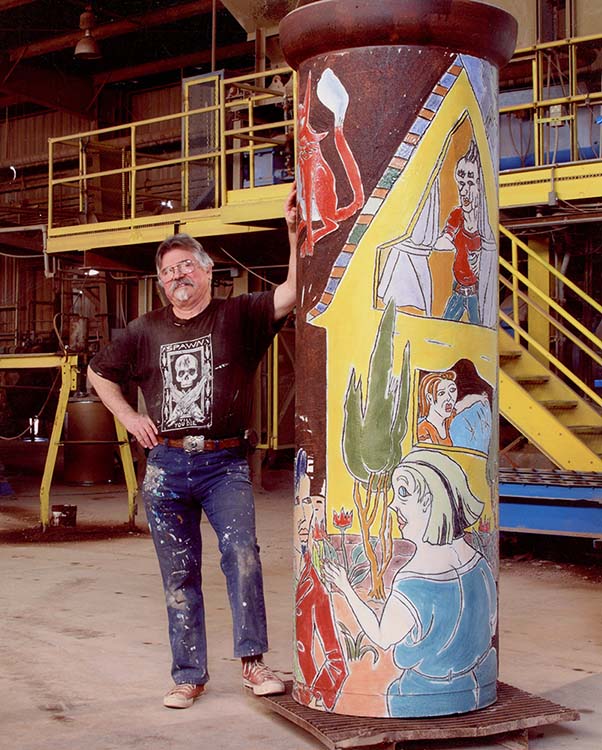
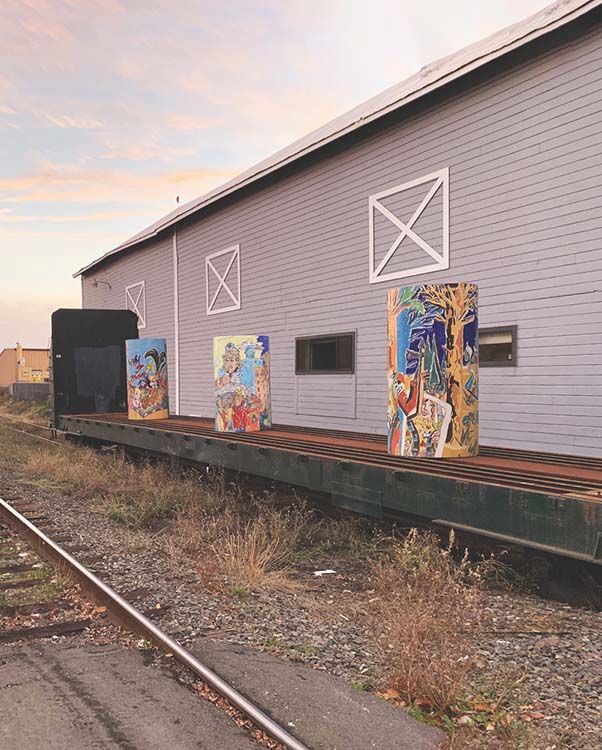
Patrick Siler, from Pullman, Washington, has worked at the Mission Clay factory off and on for over 15 years. He was invited to paint a clay pipe based on a presentation of sketches submitted to Bryan Vansell, related to his drawings and paintings. Siler said, "I was trying to achieve the same color quality and feel of acrylic paint on the clay pipe surface using underglazes and glaze."
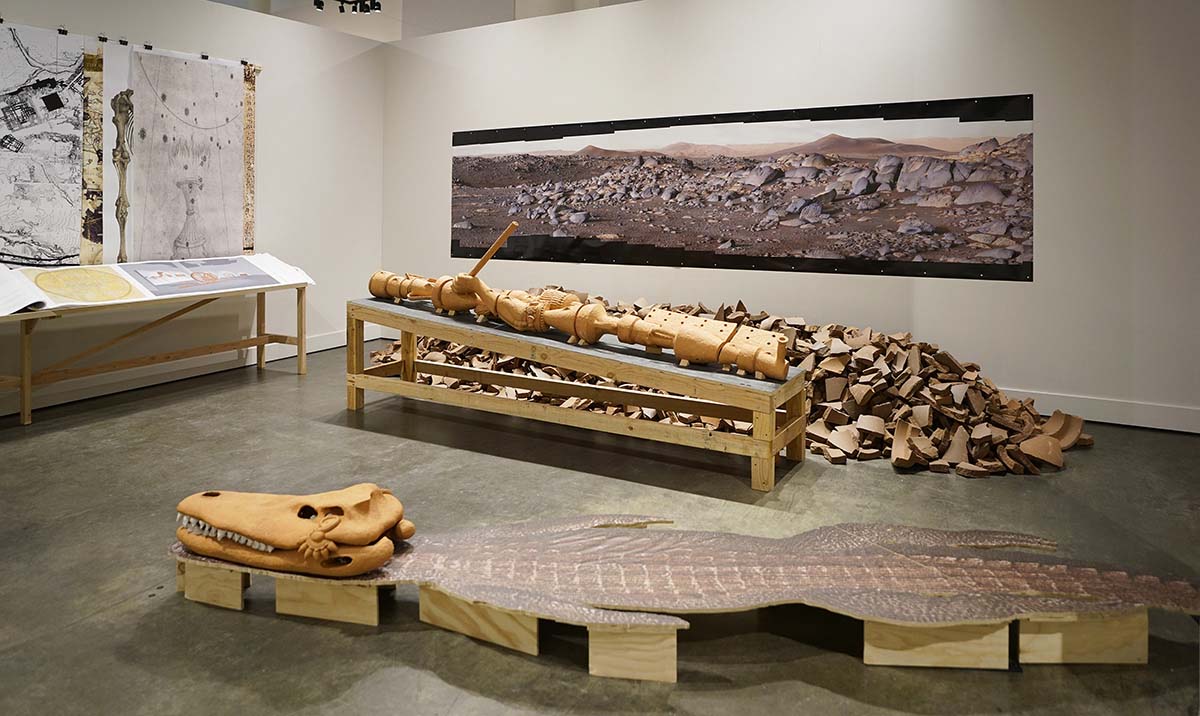
In some instances, artists prefer to use fired Mission Clay pipe or shards, rather than shaping wet clay. John Roloff and Neil Forrest crafted a form from fired clay pipe shards, titled A Roadmap to Stardust, which was exhibited at the Museum of Craft and Design in San Francisco.
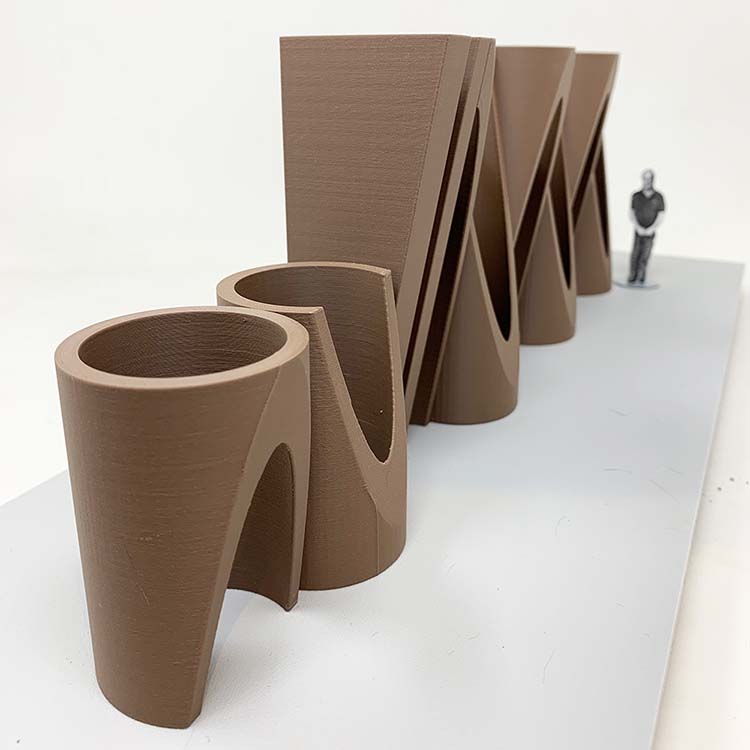
In a recent project at the American Museum of Ceramic Art, the Grant Gillis Architectural firm designed a collection study room, an education hall, and a 15 ft. (4.57 m) long by 11 ft. (3.28 m) tall conceptual pipe wall for a new Kids' Makers Space. The project pushed the manufacturing limits of the factory, enlarging the standard 8 ft. (2.4 m) pipe by approximately 30% to reach 11 ft. (3.3 m). Cutting the fired clay pipe presented another challenge, ultimately requiring an Italian-made robotic machine with diamond cutting teeth. The project is currently in development as additional technical issues are resolved.
The Future of Mission Clay
Today artists are developing ideas at Building Products - Mission Clay that extend beyond the clay pipe itself as stand-alone artwork. Artists are free to dream big, without any limitations in size. No matter how technically extreme a sculpture proposal may be, or how far it seems to exceed the factory's ability to help, Vansell always says to an artist, "let's explore the idea together with the factory staff, and see how we can realize the art piece."
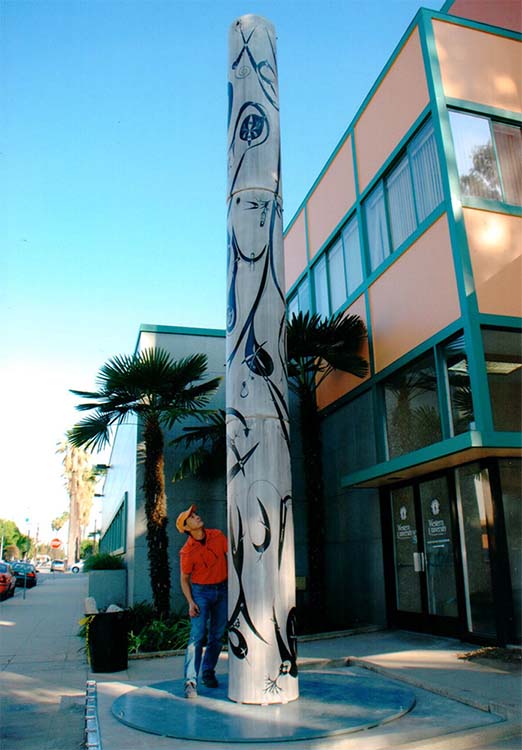
The program has supported approximately 300 professional artists and over a thousand students of all ages, and looks forward to working with artists in all disciplines, even outside the traditional ceramic realm. Coming soon: Tina Piracci is exploring an environmental concept for a ceramic sea wall in Florida designed to protect sea life; John Roloff has an idea to fabricate custom rollers engraved with his newly developed language based on ancient cuneiform text, to be impressed on clay pipe as it is extruded; and Seongmin Yoo is developing a modular clay pipe system for children's playground equipment combining carved and painted pipe.
"In the next decade, I see the program growing into an artist residency attracting international talent. Dream big — because you can at the Mission Clay Art and Industry Program."
- Bryan Vansell, Director
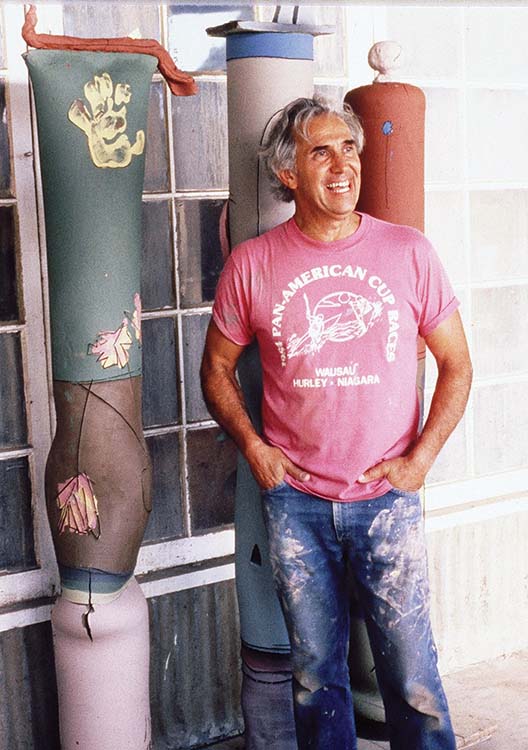
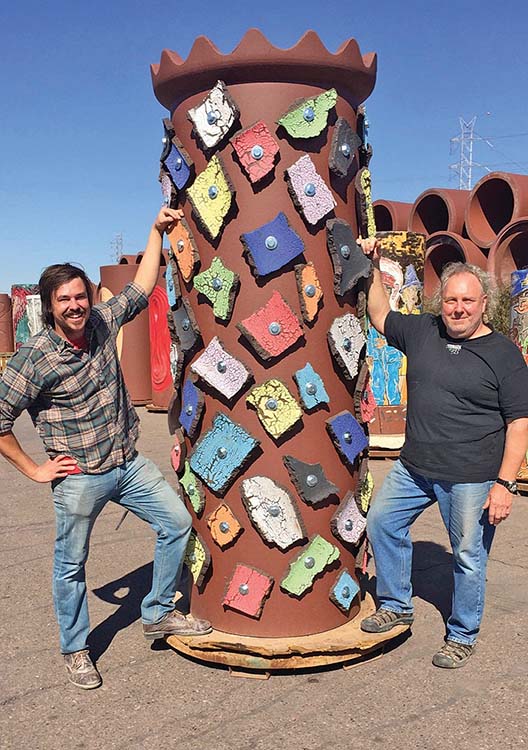
All images courtesy of Mission Clay Art and Industry Program unless otherwise noted.
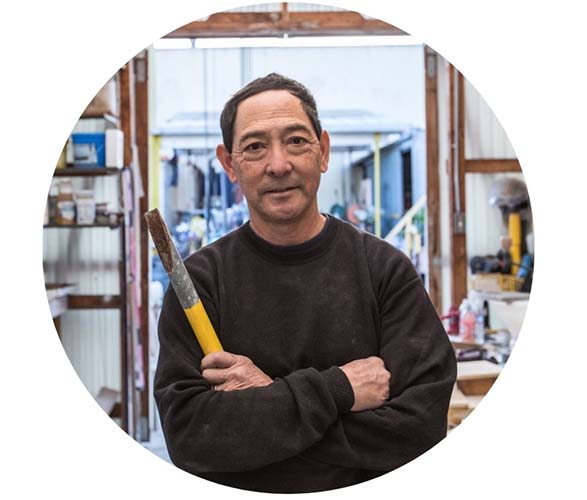
John Toki has led a multifaceted life as an artist, professor at the California College of the Arts, owner of Leslie Ceramic Supply Company, inventor of electronic kiln controllers, exhibition curator, coauthor of several books including Hands in Clay, Make It in Clay, and Fired by Ideals: Arequipa Pottery and the Arts and Crafts Movement, and Associate Director of the Mission Clay Art and Industry Program.

Toki has exhibited throughout the United States, Holland, Mexico, and Japan, with public commissions for Oakland City Hall and the Berkeley Art Museum and Pacific Film Archive. His work has also been shown at the Oakland Museum of California and the Contemporary Art Center, Cincinnati. In 2019, he presented a solo exhibition, "Fault Lines," at the American Museum of Ceramic Art. Visit John Toki's Website